01
QR and barcode workflows
Scan from a camera or image, resolve inventory links, UUIDs, SKUs and serial numbers, and design configurable action flows with previews, inputs, and confirmed execution.
04 · Resolve and integrate
Labels and software integrations resolve the same records. Scan workflows add preview and confirmation before a stock operation is executed.
Scope
A label should resolve an unambiguous record; an integration should use the same documented identifiers and operations. Open Inventory connects both paths with explicit lookup, preview, validation and idempotent execution.
Result 01
Resolve records by short link, QR code, barcode, UUID, SKU or serial number
Result 02
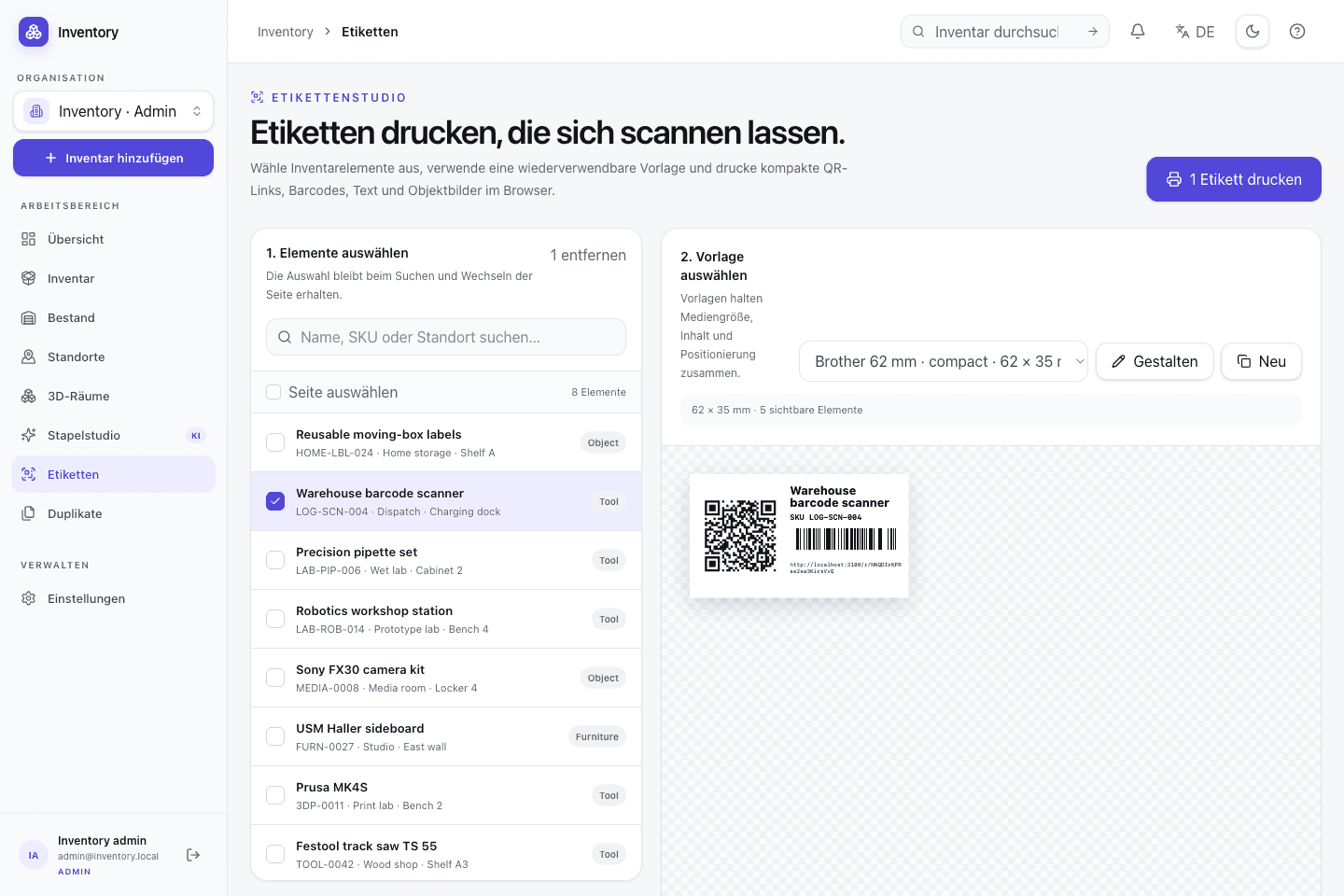
Create reusable print layouts in the browser
Result 03
Exchange data through validated CSV and scoped REST operations
Included implementation
These components are part of the MIT-licensed project. Optional providers are identified where they take part in a workflow.
Scan from a camera or image, resolve inventory links, UUIDs, SKUs and serial numbers, and design configurable action flows with previews, inputs, and confirmed execution.
Design layouts in the browser with a short QR link, Code 128, optional record image and presets including Brother 62 mm and 102 × 152 mm.
Import and export UTF-8 CSV. Row-level validation identifies invalid values, and repeated imports can use idempotent processing.
A score helps identify similar records. A merge applies related-data changes transactionally instead of leaving partially moved associations.
Expose selected records through a revocable read-only share without opening the complete workspace.
The checked-in OpenAPI 3.1 specification, interactive reference and hashed tokens with expiry and scopes make integrations inspectable.
Map store line items to bulk stock by exact SKU. Webhooks issue order quantities and reconcile refunds or cancellations with traceable reversal movements.
Sequence
A scan starts as a lookup. A stock change is written only after the record and proposed operation have been resolved and reviewed.
Use a short inventory link, UUID, SKU or serial number as the stable entry point to the record.
Combine a QR link, Code 128, text and an optional record image in a reusable print definition.
Camera, image upload or hardware scanner reads the code. The matching record is displayed before any mutation.
Run a reviewed stock action or call the same contract from an integration using a scoped token and idempotency key.
Worked example
The values are mock data, but the workflow and state changes correspond to operations implemented by Open Inventory.
Example · Tool issue
A QR code on a tool case resolves the unique inventory record. The UI shows state and location before asking whether to write the issue movement.
Entry point
Short QR link
Resolved record
TOOL-0042
Operation
Confirm issue
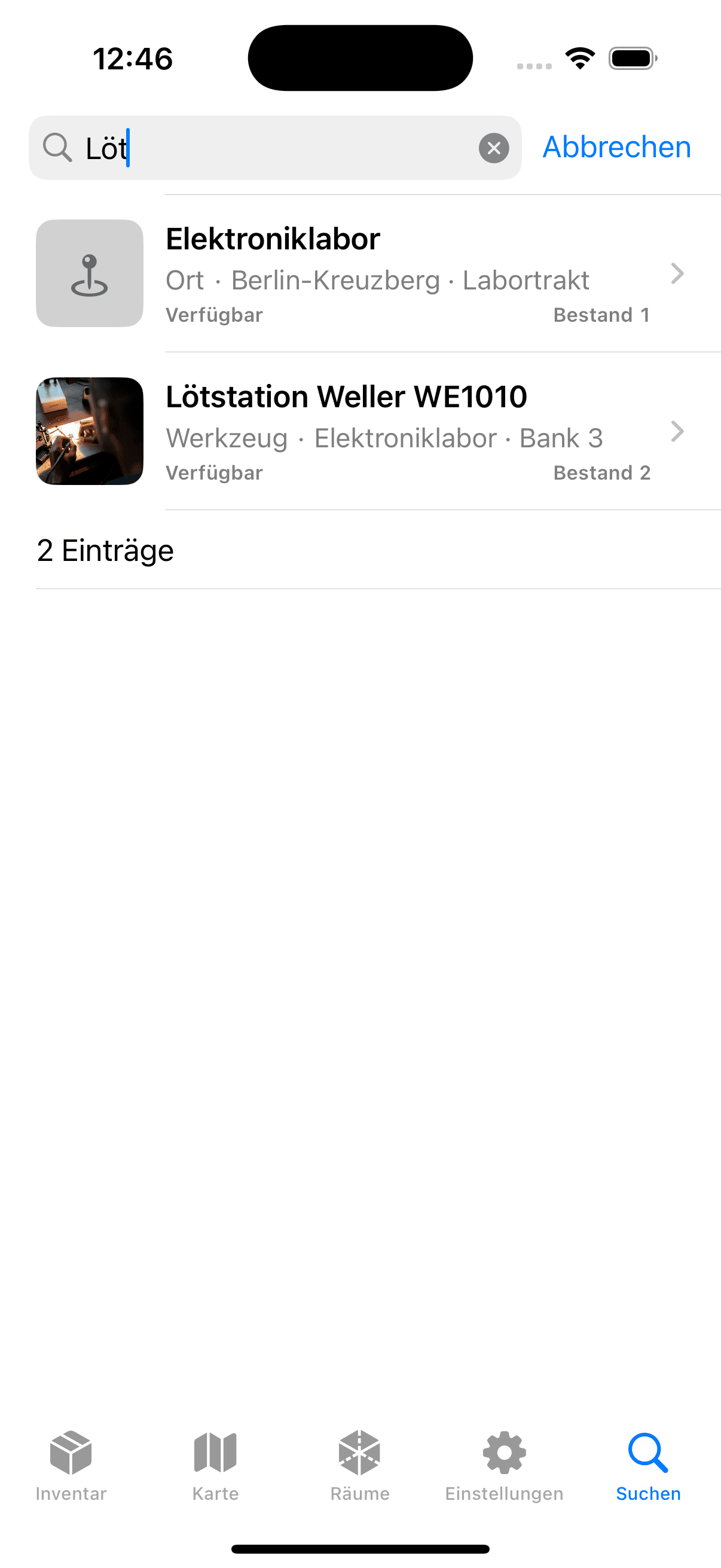
The native app recognizes QR, EAN-8/13, UPC-E, Code 128, Data Matrix, PDF417 and Aztec and calls the operator's own Open Inventory instance.
Resolve an inventory link, UUID, SKU or serial number
Display the matching record before a stock mutation
Inspect scanner and server implementations in the same repository
The OpenAPI 3.1 specification is stored as YAML in the repository. Tokens are stored as hashes and can carry expiry dates and scopes. They can be revoked without changing the underlying user account.
Checked-in OpenAPI document and interactive reference
Hashed, revocable tokens with expiry and scopes
Validated CSV as a simple open exchange path
Next feature area
Locations can be plain text, structured inventory records, map geometries or optional room captures. Each level is independent.
Operate your own instance
Review the Compose services, persistence requirements and provider configuration before exposing an instance to a network.