Import or capture
Validate an existing CSV before importing it, or create new assets from photos and reviewed suggestions.
Open Inventory for Startup
Open Inventory provides an open asset and stock layer for a growing team. It covers physical records, assignments, stock movements, purchasing, and integration, but does not claim to replace device management or accounting software.

Capture path
Take a photo · review the draft · save the record
Operational problem
A young company can outgrow its first asset sheet quickly: laptops need assignments, prototypes consume parts, and purchasing changes expected stock. Those workflows need one identifier model without forcing the company into a closed platform.
A workflow at the point of use
Capture starts with a camera or an existing code. Structured fields and deeper workflows are added without hiding the transaction being made.
Validate an existing CSV before importing it, or create new assets from photos and reviewed suggestions.
Use types, custom fields, locations, and quantity or serial tracking to represent devices and parts explicitly.
Record equipment assignments and receive ordered quantities into the correct stock location.
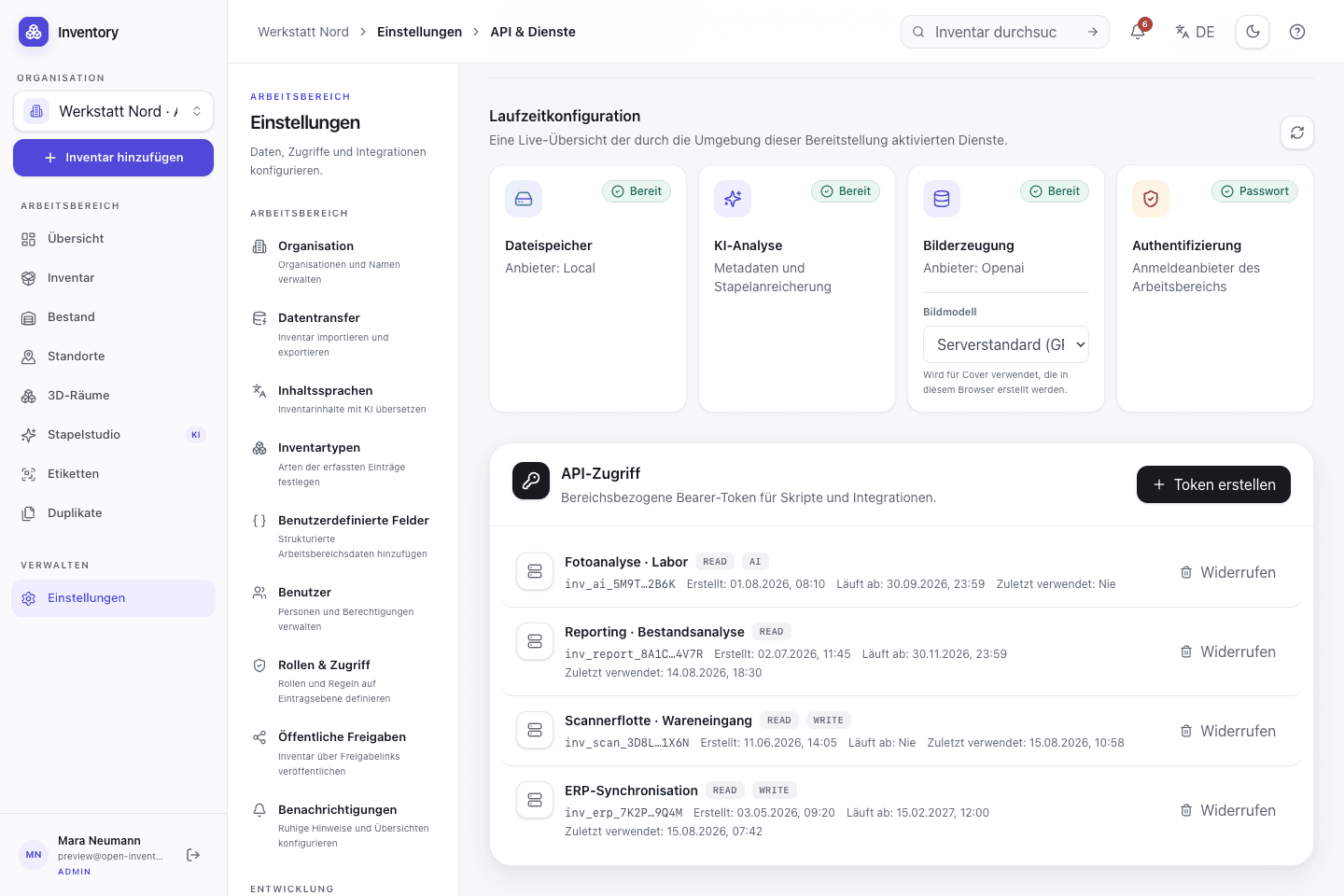
Issue expiring API tokens with only the required scopes and build against the checked-in OpenAPI 3.1 contract.
Relevant capabilities
These capabilities are part of the same MIT-licensed application. Open Inventory does not split them into closed industry editions.
Use serialised units for devices and quantity tracking for interchangeable parts within the same data model.
Keep the current assignee and previous assignments as dated records rather than editing history away.
Track ordered and received quantities and apply receipts to stock through explicit transactions.
Separate viewing, editing, stock, token, and administrative permissions and apply conditional access where needed.
Use revocable bearer tokens for scripts and integrations instead of sharing an administrator session.
Preview validation errors before import and export core inventory data for further processing.
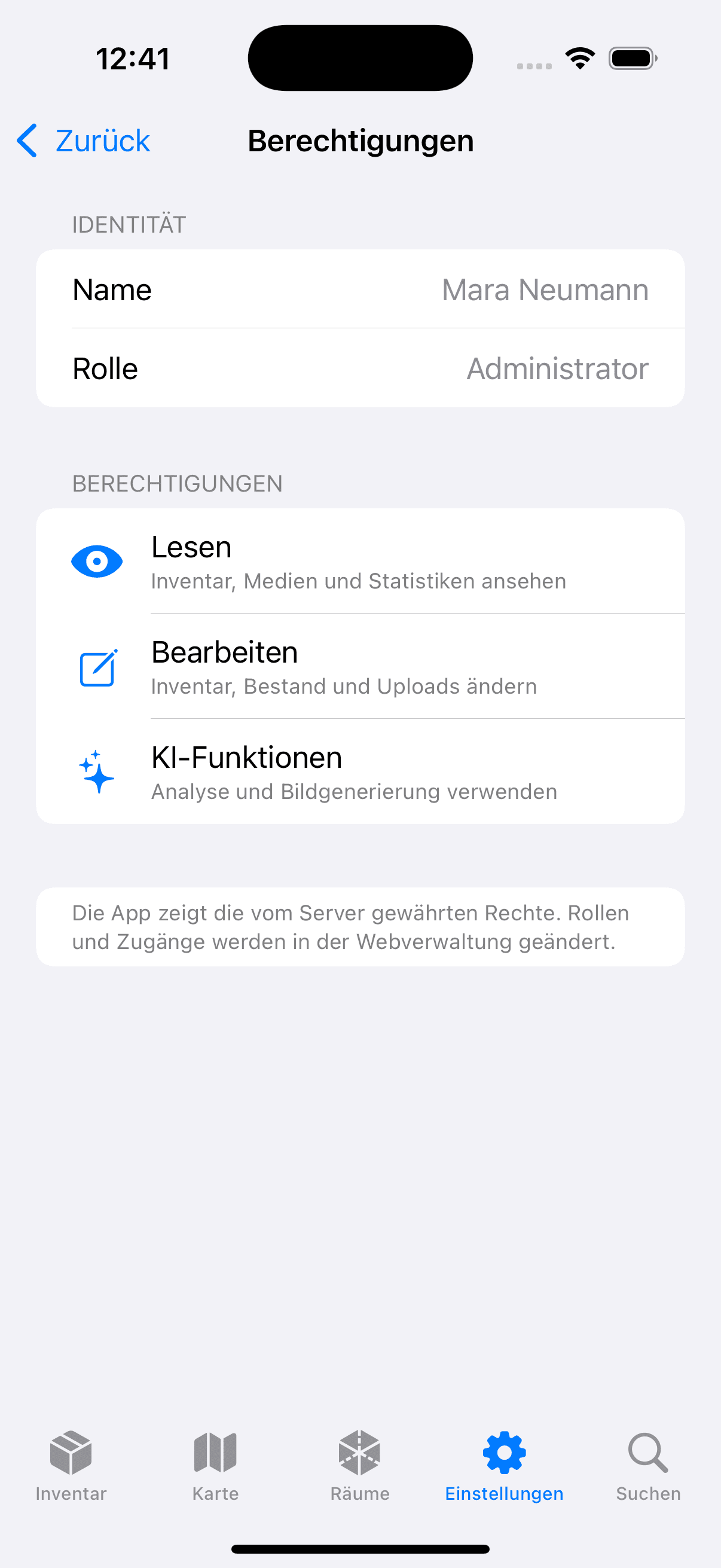

Native iOS app
SwiftUI · included in the repository
The native app can photograph a new device, scan its code, and assign it against the team's own server. It is source-available in the same MIT-licensed repository as the web application.
Open source is part of the operating model
The deployment uses Next.js, PostgreSQL, migrations, and persistent media storage. The source and API contract are open; operations, backups, upgrades, and any optional provider remain explicit responsibilities rather than hidden service behaviour.
Run it on your infrastructure
Start the Docker stack, photograph one real object, and inspect the resulting fields and media before choosing a wider rollout.